
Cloughaneely and World War II
Cloich Cheann Fhaola agus An Dara Cogadhdomhanda
The Patrolling of Coastal Areas
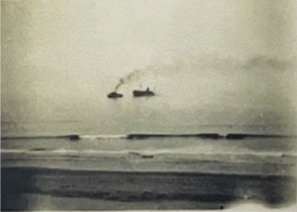
The reality of war was tangible. There was a noted increase in the movement of ships in convoys along our coastline. The British experience of World War I was made the Prime Minister, Winston Churchill realises that their survival depended on the maintenance of shipping corridors, free from submarine attack. The shipping line ran along the Donegal Coast with Muckish Mountain and Tory Island becoming geographical guides.On Sunday the 3rd of September 1939 all British ships were informed to “commence hostilities with Germany forthwith”. However, it was to be the German U-boats that inflicted the first casualties. Three British ships were torpedoed by German lifeboats under the command of Hans Wilhelm Von Dresky. Many more torpedo attacks followed between 1939 -1941.
Probably, one of the worst sea disasters of World War II occurred on the 2nd of July, 1940 when the Arandora Star sunk approximately 100 miles West of Bloody Foreland. 820 people drowned while 800 more survived. Gardaí patrolled the beaches ensuring that any bodies washed in were identified when possible and buried respectfully. This explains how many British and Dutch sailors were buried at St. Ann’s Graveyard, Killult.
Of those buried there are three of the Stolwijk’s crew. On the 6th of December, distress signals were picked up by the Falcarragh Gardaí. The Stowijk had run ashore on rocks between Innisdooey and Innisbeg. The eighteen men aboard survived while those who abandoned ship to reach shore perished.
As the rescue was a precarious operation, John Boyle of Aranmore was formally recognised for his services by the Duchess of Kent on the 25th of October 1945 who presented him with a gold medal. He received further recognition from Queen Wilhelmina of the Netherlands.
By 1941, the British R.A.F. coastal command operations hindered the movement of U-boats. This ended the cycle of ships that were being sunk along the Donegal coastline.
The Monitoring of Aircraft Movement
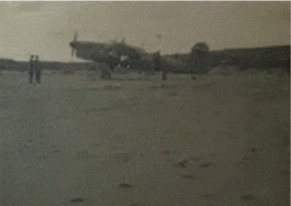
It was not uncommon for local people to hear planes fly overhead. In fact, on three occasions, R.A.F. planes crash landed in Cloughaneely. The first aircraft to land was at Ballyness strand on the 17th of July 1942. The four occupants escaped unharmed.On the 28th of February 1943, a Wellington Bomber crashed at Meenderry. There were no recorded survivors.
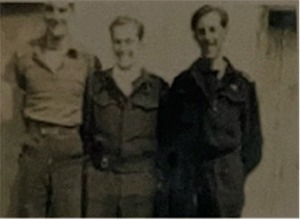
Some months later on the 6th of August 1943, a British Beaufort plane made an emergency landing on Ballyness strand. None of the crew was injured. They included sub Lieutenant I. Irvine, sub Lieutenant J.H. Williams and leading aircraftsman W.C. Murray. The Gardaí and the local defence responded to the situation immediately. The air men were treated cordially in Matthew’s Hotel prior to the refuelling of their plane and subsequent take off.
.langgaLe linn an Dara Cogadh Domhanda, bhí na Gardaí Síochána, i gcomhar leis an Fórsa Cosanta Áitiúil (FCA), ar dualgas ar fud fad na tíre le déanamh cinnte nach ndéanfaí sárú ar neodracht na hÉireann. Chiallaigh seo go raibh orthu súil ghéar a choinneáil ar na cladaí agus monatóireacht a dhéanamh ar eitleáin san aer.
Patról an Chósta
Ní i ngan fhios de bhunadh na háite seo a chuaigh an cogadh ar aghaidh. Bhí méadú suntasach i líon na mbád a bhí ag seoladh faoi thionlacan amach ó chósta an Iarthuaiscirt. De thairbhe an cheacht a bhí faighte ón Chéad Chogadh Domhanda, thuig Príomh-Aire na Sasanach, Winston Churchill, go raibh a dteacht slán ag brath ar na bealaí farraige a choinneáil slán ó ionsaí ó bhádaí faoi thoinn. Bhí an bealach seoltóireachta le fad cósta Dhún na nGall agus bhí an Mhucais agus Oileán Thoraí mar theoraigh gheografacha.Ar an Domhnach, an 3ú lá de Mheán Fómhair, 1939, tugadh ordú do chabhlach na Breataine uilig “a ghabháil i gceann troda leis an Ghearmáin ar bhuille boise”. Ach ba iad U-fhomhuireáin na Gearmáine, faoi cheannas Hans Wilhelm Von Dresky, a ba chiontaí leis na chéad taismí nuair a chuir siad trí long de chuid na Breataine go tóin poill le toirpéidí. Is iomaí ionsaí le toirpéad a tharla idir 1939 - 1941.
Tharla ceann de na tubaistí mara ba mheasa den Dara Cogadh Domhanda ar an 2ra lá de mhí Iúil 1940 nuair a cuireadh an Arandora Star go tóin poill 100 míle amach ó Chnoc Fola. Cailleadh 820 duine agus tháinig 800 slán. Bhí na Gardaí ar phatról fá na tránna le déanamh cinnte go mbeadh aitheantas déanta ar gach corp a thiocfadh i dtír agus go bhfaigheadh siad uilig adhlacadh urramach. Míníonn seo cén fáth go raibh an oiread sin mairnéalach de chuid na Breataine agus na hOllainne curtha i reilig Naomh Anna i gCill Ulta.
Tá triúr ó fhoireann an Stolwijk curtha sa reilig sin. Ar an 6ú lá de Nollaig 1940, fuair na Gardaí ar an Fhál Charrach comharthaí guaise ón Stolwijk a bhí ar na carraigeacha idir Inis Dumhaigh agus Inis Beag. Sábháladh ocht gcloigne déag fear a d’fhan ar bord ach báitheadh deichear a thug iarraidh snámh i dtír.
Gníomh thar a bheith contúirteach a bhí sa tarrtháil agus dá thairbhe sin, tugadh aitheantas fhoirméalta do Sheán Ó Baoill, caiftín bhád tarrthála Árainn Mhór, ar shon a chuid seirbhísí nuair a bhronn an Duchess of Kent bonn óir air ar an 25ú lá de Dheireadh Fómhair, 1945. Níos moille ná sin, fuair sé aitheantas fosta ó Bhanríon Wilhelmina na hOllainne.
Faoin bhliain 1941, chuir gníomhaíochtaí ceannais cósta R.A.F. na Breataine bac mór le gluaiseacht na U-fhomhuiréan agus chuir seo deireadh le bádaí a bheith á gcur go tóin poill ar chósta Dhún na nGall.
Monatóireacht ar Eitleáin san Aer
Bhí muintir na háite breá cleachtaithe leis a bheith ag éisteacht le dordán na n-eitleán sa spéir. Tharla sé trí huaire gur éigean d’eitleán de chuid an R.A.F. tuairteáil i gCloich Cheann Fhaola. Tháinig an chéad eitleán anuas ar thrá Bhéal an Easa ar an 17ú de mhí Iúil 1942. Níor gortaíodh an ceathrar fear a bhí ar bord.Sa bhliain 1943, ar an 28ú lá de mhí na bhFaoilleach, thuairtéail Wellington Bomber i Mín Doire. Níor tháinig duine ar bith slán, chomh fada is eol dúinn.
Cúpla mí ina dhiaidh sin, ar an 6ú lá de mhí Lúnasa, rinne eitleán Beaufort de chuid na Breataine tuirlingt éigeandála ar thrá Bhéal an Easa. Níor gortaíodh duine ar bith dá raibh ar bord, Foleifteanant I. Irvine, Foleifteanant T.H. Williams agus an Ceann Feadhna, W.C. Murray. Bhí na Gardaí agus an F.C.A. ar an láthair agus thug siad na fír go teach ósta Matthews, áit ar cuireadh cóir mhaith orthu go dtí go raibh an t-eitleán reidh le himeacht arís.
Recorded below are some of the vessels sunk near Tory Island between 1939 - 1941
Seo thíos ainmneacha na long a chuaigh go tóin poill in aice le hOileán Thoraí idir 1939 - 1941
| Name of Vessel | Type of Vessel | Destination | Date Sunk | Casualties | Location when sunk |
| Thomas Hanks | Steam trawler | 20th November 1939 | Sunk 14 miles North West of Tory | ||
| Delphine | Steam trawler | 20th November 1939 | Sunk less than 20 miles east of Tory | ||
| Sea Sweeper | 20th November 1939 | Sunk 25 miles North West of Tory | |||
| Leukos | Neutral Irish trawler | 9th March 1940 | Shelled off Tory | ||
| Carinthia | Armed merchant ship, 20,227 tons | 6th June 1940 | 3 drowned | Sunk 120 miles North West of Tory | |
| Frances Massey | Steamer carrying 7,500 tons of iron ore | Newfoundland to Glasgow | 7th June 1940 | 34 drowned | Sunk 14 miles North West off Tory |
| Arandora Star | Requisitioned cruise liner with capacity for 650 passengers and crew. Capacity increased to 1,600 people during war | Carrying internees and P.O.W. | 2nd July 1940 | This was probably one of the worst sea disasters of WW2; 820 drowned, 800 survived | Sunk 100 miles West of Bloody Foreland |
| Jersey City | Steamer | Newport to Baltimore | 31st July 1940 | 2 drowned | Sunk 40 miles North West off Tory |
| Pindos | Greek steamer, 7,500 tons of grain | Part of convoy from Bahia to Avonmouth | 4th August 1940 | 3 drowned | Sunk 25 miles West north-west off Tory |
| Betty | Steamer, 2,373 tons of rice | From Saigon to Liverpool | 14th August 1940 | All of the crew were drowned | Sunk 25 miles off Tory |
| Dunvegan Castle | Requisitioned auxiliary cruiser | Escorting convoy home from Freetown, West Africa | 20th August 1940 | Some buried in St Ann’s Graveyard, Killult | Sunk 200 miles West of Donegal |
| Stolwijk | Dutch vessel, 3,500 tons of paper and iron | In convoy from Newfoundland to Scotland | 6th December 1940 | 10 drowned; 3 buried in St Ann’s, Killult | Vessel perished on rocks at Innisdooey |
| Empress of Britain | Three funnelled ship, 42,384 tons | On a voyage from Suez via Durban and Capetown | 28th October 1940 | 43 drowned | Sunk 55 miles West of Tory after torpedos hit the ship |
| Temple Mead | 21st January 1941 | Both these ships were attacked within an hour of each other about 40 miles West of Tory | |||
| Englishman | Requisitioned naval tug | 21st January 1941 | |||
| Bussum | Dutch vessel, 5,200 tons of grain | On route from Montreal to Belfast | 23rd November 1941 | All 29 crew survived | Sunk 9 miles North West of Tory |
Location
An tSean Bheairic
An tSráid Mhór
An Fál Carrach
Co. Dhún na nGall
F92 YE2C


